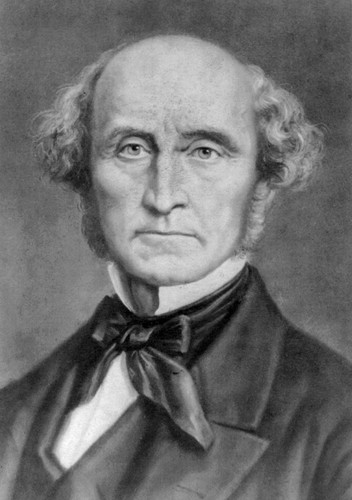
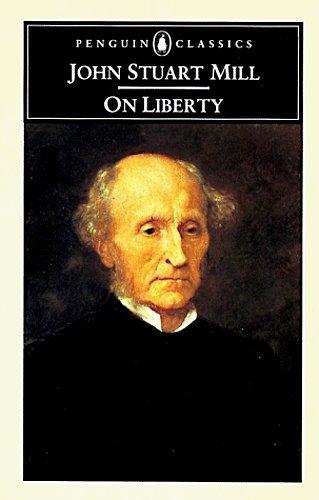
John Stuart Mill
1806–1873
John Stuart Mill was a British philosopher, economist, and political theorist — the most influential liberal thinker of the nineteenth century. Educated with extraordinary intensity by his father James Mill, he had read Greek at three and was working through logic and political economy before his teens. His major works — A System of Logic, Principles of Political Economy, On Liberty, Utilitarianism, and The Subjection of Women — shaped Anglo-American political philosophy for generations. He also served as a Member of Parliament, where he was the first person to call in the House of Commons for women's suffrage.
Works
On Liberty
Mill's 1859 essay is the canonical defence of individual freedom against the tyranny of both the state and social opinion. Its central 'harm principle' — that the only legitimate reason for limiting a person's freedom is to prevent harm to others — remains the starting point for liberal political philosophy.
Utilitarianism
Mill's 1863 essay is the clearest and most readable defence of utilitarianism — the view that actions are right insofar as they promote happiness. It also addresses the famous objection that pleasure comes in higher and lower qualities, not just quantities.